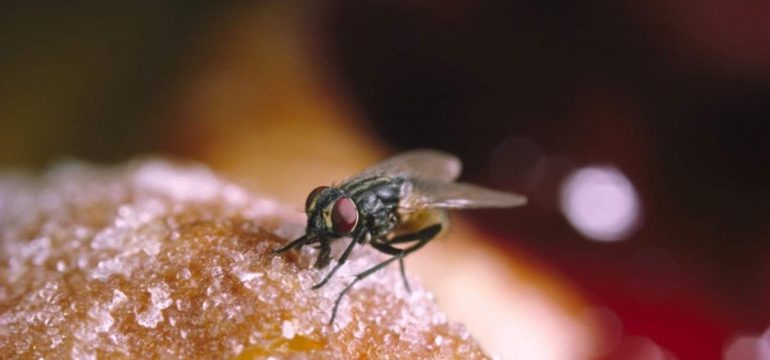

You’re enjoying a meal on a warm Irish summer afternoon, and a house fly relentlessly buzzes around you and your food. You instinctively swat it away, but a disturbing thought lingers: “Did that fly just lay eggs on my food?”
The quick answer: No, it is extremely unlikely. House flies rarely lay eggs on fresh, clean human food. Female flies actively search for moist, decaying organic matter, such as rotting kitchen waste or manure, because their larvae depend on bacteria from decaying material to feed and survive.
However, that doesn’t mean a buzzing fly is harmless. While you don’t need to worry about fly eggs on fresh meals, adult flies pose a very real contamination threat. As they move between waste heaps, manure, and food surfaces, adult house flies can transmit dangerous microorganisms directly onto your food and countertops.
In this guide, we take a closer look at:
- The real threat: how house flies actually contaminate food.
- The house fly (Musca domestica) life cycle and how environmental factors affect it
- How to prevent and control house fly infestations.
The real threat: how house flies actually contaminate food
If fly eggs aren’t being laid on your dinner, why is a fly landing on food still a major cause for concern?
While you can stop worrying about maggots hatching on a fresh dish, adult house flies are prolific carriers of disease-causing pathogens. The real danger isn’t what flies might leave behind in the form of eggs, but what they actively spread every time they land on a countertop, utensil surface or food.
How adult flies spread pathogens
The primary risk from house flies stems directly from their breeding and feeding habits. Flies spend a significant portion of their lives crawling through filthy environments, including animal manure, faeces, decaying animal carcasses and rotting food waste. An adult fly transfers harmful microorganisms in three distinct ways:
- Direct contact (feet and bodies): A fly’s body is covered in microscopic hairs and sticky foot pads, which collect microorganisms while navigating rotting organic matter. When the fly lands on your food or clean kitchen surfaces, these bacteria are instantly transferred.
- Regurgitation: House flies cannot chew solid food. To feed, they regurgitate gut contents and digestive fluids directly onto solid food to liquefy it, then drink it back up. Their mouthparts and gut fluids carry microorganisms from their previous unsanitary meals.
- Defecation: House flies frequently defecate on the surfaces and food items where they land and feed.
Why female house flies carry more bacteria
Not all house flies present the same level of risk. Research shows that female house flies carry significantly more microorganisms than males. This comes down to their differing nutritional needs:
- Male flies primarily seek out carbohydrate-rich foods for basic energy.
- Female flies require protein-rich substances, such as blood from meat or dead animals, and mucus, to develop their ovaries and produce eggs. Their exposure to filthy environments and hazardous microorganisms is therefore much higher.
Why fly eggs present a lower direct risk
It may sound surprising, but a fly egg itself presents a much lower direct contamination risk than a live adult fly. Eggs laid by flies have not been exposed to manure heaps, waste bins, or decaying matter the way the external parts of flies have. The primary health hazard is always the live adult fly landing directly on food and surfaces around food after visiting an unsanitary site.
What microorganisms do house flies carry?
Over 130 pathogens have been identified on the body surfaces of flies; mainly bacteria, but also other types.
- Bacteria: House flies are notorious for spreading foodborne bacteria such as Salmonella, Escherichia coli (E. coli), Campylobacter, Staphylococcus, Streptococcus and Pseudomonas. They can also carry antimicrobial-resistant bacterial strains.
- Parasites: Flies can transmit parasites such as roundworms (Ascaris lumbricoides), hookworms, pinworms and tapeworms.
- Fungi: Flies can carry fungal spores, such as from Candida and Aspergillus.
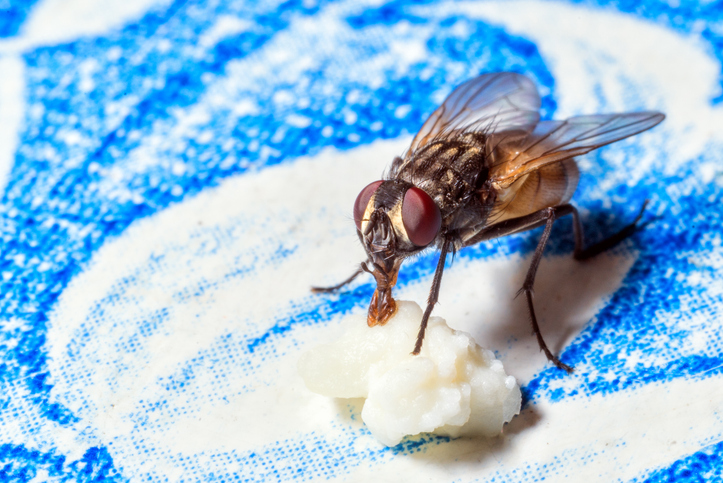
What is the life cycle of a house fly (Musca domestica)?
Understanding the life cycle of the common house fly (Musca domestica) offers more than just a biology lesson; it provides crucial insights into managing fly populations both directly and indirectly around your property. Recognising breeding sites and the duration of each developmental stage helps determine the optimal times and locations for waste removal and intensive cleaning.
Like most insects, the house fly passes through four distinct life cycle stages:
Egg → Larva (Maggot) → Pupa → Adult
The duration of each stage relies heavily on environmental conditions, particularly ambient temperature and food supply.
A. The egg stage
- Appearance: House fly eggs are white, roughly 1mm long, and shaped like tiny grains of rice.
- Breeding sites: Eggs are laid in small groups, often clustered alongside egg batches from other female flies, on or just beneath the surface of moist, decaying organic matter. Preferred laying sites include fresh animal manure, decaying vegetable matter and rotting kitchen waste.
- Hatching time: Depending on environmental temperatures, eggs hatch into larvae rapidly, taking 8–20 hours.
- Fresh food fact: Because female flies actively seek out moist, decaying material for egg-laying, it is highly unlikely a house fly will lay eggs on fresh food in your home or a restaurant.
B. The larval stage (maggots)
- Appearance and diet: The larvae, commonly known as maggots, are creamy white, cylindrical and taper towards the head. They feed specifically on the bacteria within decaying matter.
- Growth: Larvae progress through three instar stages and grow to 7–12mm in length. Because maggots cannot develop without bacteria, female adult flies must seek out bacteria-rich rotting material rather than dry or fresh food.
- Development rate: Larval development speeds up significantly in warmer environments:
- Above 30°C: Larvae complete development in just 4–13 days.
- At 12–17°C: Development slows to 14–30 days.
- Nutritional factors: Larval growth also depends on the nutritional quality of the decaying waste. Studies show animal manures (such as horse, pig, cattle, or poultry dung) produce flies more efficiently than rotting vegetable waste. While larvae can survive in lower-nutrition environments (such as weak concentrations of dairy manure in sand), development takes longer.
- Transition: Once fully grown, the larvae crawl away from their feeding site to a nearby cool, dry area to pupate.
C. The pupal stage
- Appearance: During pupation, the larva forms a protective outer case from its skin. The pupa measures 4–8mm long, is blunt at both ends, and shifts from creamy yellow to reddish-brown, turning black as it matures.
- Transformation duration: Metamorphosis into an adult fly takes 2 to 6 days in hot weather (32–37°C), but extends to 17 to 27 days in cooler conditions of around 14°C.
- Emergence: To break open its hardened pupal case, the adult house fly repeatedly expands a sac on its head until the case splits open.
D. The adult stage
Emerging adult flies immediately seek out food sources. However, male and female house flies have distinctly different dietary needs:
- Male diet: Male flies prefer carbohydrate-rich food sources for basic energy.
- Female diet: Female flies require protein-rich sources (such as blood from meat or dead animals, and mucus) for ovary development and egg production. They also consume carbohydrates for energy while searching for egg-laying sites.
- Reproduction: Female flies generally mate only once, within 1 to 2 days of emerging, and produce several clutches of fertilised eggs over their lifetime.
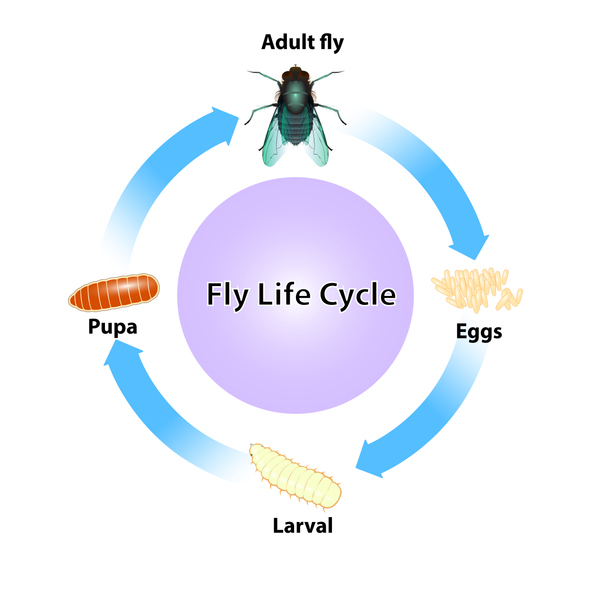
How temperature affects the house fly life cycle
Warmer temperatures dramatically accelerate the rate at which flies mature and reproduce. A laboratory study comparing house fly reproduction at 25°C and 32°C highlights how heat affects their egg production rate and quantity. At 25°C, egg production takes longer, but the fly produces more eggs.
| 25°C | 32°C | |
| Time to first egg laying | 6 days | 1.5 days |
| Number of eggs in first clutch | 75 eggs | 72 eggs |
| Clutches produced per female | 6 clutches | 6 clutches |
| Egg-laying period | 17 days | 11 days |
| Total number of eggs in lifetime | ~440 eggs | ~350 eggs |
What does this mean for house fly numbers in Ireland?
In natural or wild conditions where food quality and availability fluctuate, development times are generally longer, and overall egg production is lower. Moreover, a typical Irish summer averages between 18°C and 22°C, with only brief heat spikes during warm spells, such as those in June 2026.
- Standard Irish summer: At typical temperatures (15–20°C), a fly’s journey from egg to adult takes around two to three weeks.
- Warm summer spells: When temperatures approach 22–25°C, fly development accelerates significantly. While Ireland rarely experiences the sustained 25–32°C lab conditions under which flies complete their life cycle in under a week, even a moderate Irish warm spell can cause local fly populations to double in a matter of days. Also, even in Ireland, a wheelie bin sitting in sunlight can quickly heat up, creating ideal conditions that shorten the fly life cycle.
How to prevent and control fly infestations
When it comes to keeping flies out of your home or business, prevention is always easier than dealing with an established infestation. The two fundamental pillars of effective fly management are sanitation (removing food and breeding grounds) and exclusion (keeping them outside).
A. Essential sanitation practices (deny food and breeding sites)
Because house flies require moist, organic matter to reproduce and feed, maintaining rigorous cleanliness is your first line of defence.
- Maintain kitchen and food hygiene: Always keep food covered, clean food preparation surfaces immediately after cooking, and ensure ingredients are stored in sealed containers.
- Isolate organic waste: Remove or isolate any decaying material that flies could use for egg-laying, including kitchen scraps, rotting fruit, fallen garden fruit, and wet grass cuttings.
- Practice smart waste management: Place all household food waste into sealed plastic bags before putting it in outdoor wheelie bins or dumpsters.
- Ensure bin lids fit tightly to prevent adult flies from crawling inside to lay eggs.
- Maintain regular waste collection: Arrange for regular waste collection, especially during warmer months, so any fly eggs that manage to land in your bin are removed before they complete their life cycle into adults.
- Compost with care: Flies can readily breed in organic compost bins. Keep compost bins tightly sealed and cover fresh kitchen scraps or garden grass cuttings with dry matter, such as soil or leaves, to block egg-laying female flies.
B. Exclusion and active control
Even with spotless sanitation, flies will still venture near your property in search of food and shelter. Exclusion barriers prevent them from getting indoors in the first place.
- Install window and door screens: During warm spells when you want to open windows and patio doors for ventilation, net screens can provide an essential physical barrier that keeps flies out while letting fresh air in.
- Use fly traps: For persistent fly problems in homes or food businesses, there is a range of fly traps, including Rentokil Ireland’s Ecocatch fly trap, the Rentokil Fly Box, and specialised insect light traps, such as the Rentokil Lumnia insect light traps (ILTs) that use UV LED technology to attract and capture flies hygienically.
- Exercise caution with chemical treatments: If using fly sprays or insecticides, use them strictly according to the manufacturer’s instructions. To prevent chemical contamination, never spray insecticides near food, food-preparation surfaces or kitchen utensils.
Keep your home or business fly-free
House flies rarely lay eggs on fresh food, as larvae require decaying organic matter to survive. However, flies remain a major hygiene risk. They transfer dangerous pathogens from waste sites to your food and surfaces through contact, regurgitation and defecation.
Don’t let unwanted flies compromise your food safety, peace of mind or business reputation. Whether you are dealing with a seasonal surge of flies in your home kitchen or require a fully compliant fly management strategy for a commercial food business, our team of expert technicians is here to support you.
FAQs
1. Should I be worried about house flies laying eggs on my food?
No, it is extremely unlikely. House flies prefer to lay their eggs in moist, decaying organic matter like rotting kitchen waste or manure, not on fresh human food.
2. If they don’t lay eggs on food, why are flies considered a health risk?
While fly eggs themselves are low risk, adult flies are dangerous carriers of disease. They transfer pathogens from filthy environments, such as manure and waste heaps, onto your food and surfaces through their feet, bodies, regurgitation, and defecation.
3. Are female house flies more dangerous than males?
Yes, females generally carry more pathogens because they require protein-rich food (like decaying animal matter) to produce eggs, which exposes them to more dangerous bacteria and microorganisms than males, who primarily seek carbohydrates for energy.
4. How does temperature influence fly reproduction?
Warmer temperatures significantly speed up the fly life cycle. At 32°C, a female can begin laying eggs in as little as 1.5 days, whereas at 25°C, it takes six days. In Ireland, warm spells can cause local populations to double rapidly.
5. What are the most effective ways to prevent fly infestations?
The most effective approach involves two steps: sanitation and exclusion. Keep food covered, dispose of waste in sealed bins, and use physical barriers like window screens or specialised fly traps to keep pests out of your home or business.