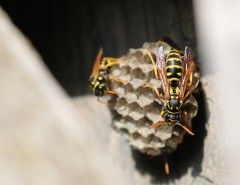


Wasps are most active in the warm summer months. In Ireland, the Common Wasp and German Wasp cause the most annoyance and painful stings. Even with their special yellow and black body, they can still be confused with hornets, although hornets are not as common in this country, they can still bite and sting you.
These are probably the most maligned of pests, because of their cantankerous, aggressive nature and nasty stings. But how much do you know about these persistent summer insects?
Wasp stings
When you mention wasps to most people, the first thing they’ll probably think about is painful stings. If you’ve been unfortunate enough to get a wasp sting, you’re unlikely to forget the experience! But exactly what dangers do wasps pose? Let’s consider some common questions.
Do wasps sting or bite?
It probably comes as no surprise to learn that wasps can sting or bite. Their fearsome reputation is certainly deserved.
Some species of wasps bite, though they rarely bite humans. Instead, they usually bite smaller insects.
When wasps want to deter humans, they usually resort to stinging rather than biting. The reason for this is obvious. If you’ve ever been stung, you’ll know how effective this form of attack is. However, do remember that wasps will generally only sting if they feel threatened.
Can wasps sting more than once?
Again, the wasp’s reputation is deserved! If it attacks you, it can sting you many times.
A wasp’s stinger is smooth, like a needle, so it can sting your skin many times. Unlike bees, wasps don’t lose their stingers when they attack.
Do wasps die when they sting you?
Don’t confuse wasps with bees. If a bee stings you, it leaves its stinger in your skin, which leads to the bee’s own death. Wasps, as you now know, are able to retract their stingers from your skin and attack many times if they take a disliking to you.
How do you treat a wasp sting?
The usual reaction to a wasp sting is to scream and jump up and down. However, this perfectly natural reaction is not really going to help your situation!
Once you’ve come to terms with the fact that a wasp has stung you, you need to try to calmly assess the situation. The first thing you’re going to want to do is ensure you’re not having an allergic reaction to sting. If you start to go into shock, seek immediate medical assistance.
If you’re not going into shock, you’re still going to need to take some quick practical steps to protect yourself:
- Clean the sting area
- Apply ice on any swelling
- Use an antiseptic spray or cream to reduce the risk of infection
- Use a painkiller to alleviate the pain, or take an antihistamine to combat any itchiness
Wasps and other pests
People often confuse wasps with other pests. Let’s learn some more about how wasps differ from other insects.
What’s the difference between wasps and hornets?
Did you know that hornets are a type of wasp?
Hornets tend to be much bigger wasps, and are usually black and white, or brownish red. Although many wasps are yellow and black, their colouring depends on the species.
What’s the difference between wasps and bees?
Did we tell you that wasps are not the same as bees?
Although wasps and bees are different insects, they are both from the Hymenoptera order of insects. However, they are visibly different. Wasps are smooth, slender, almost graceful insects, whereas bees tend to be larger, hairier and, well, less graceful.
The other difference is in their personalities. It won’t surprise you to learn that wasps are more aggressive than bees. Remembers, if a bee stings you, it will die afterwards. So a bee will need to have a pretty compelling reason before it decides to attack you. On the other hand, it takes very little to provoke a wasp! And, if you annoy a wasp, it can sting you many times. Bees seem almost pacifist by comparison!
Wasp Nest Removal
If you are experiencing high numbers of wasps in your home or business there is likely to be a nest nearby, either on your property, in your garden or very close by. A mature nest in summer can contain thousands of wasps. Wasps make their nests from chewed wood pulp and saliva, giving them distinctive papery walls.
Removing a wasp nest can be very dangerous. Wasps inside the nest will feel threatened and often become aggressive. This could cause them to sting you and others as they defend their nest and young. To reduce the risk of stings to you and your family, arrange for a professional wasp nest treatment. This effective solution will eliminate the wasps and keep you safe from the threat of stings.
Worried about a Wasp Nest? Get in contact with us today for expert advice and immediate assistance from our local team. We’re happy to help you!